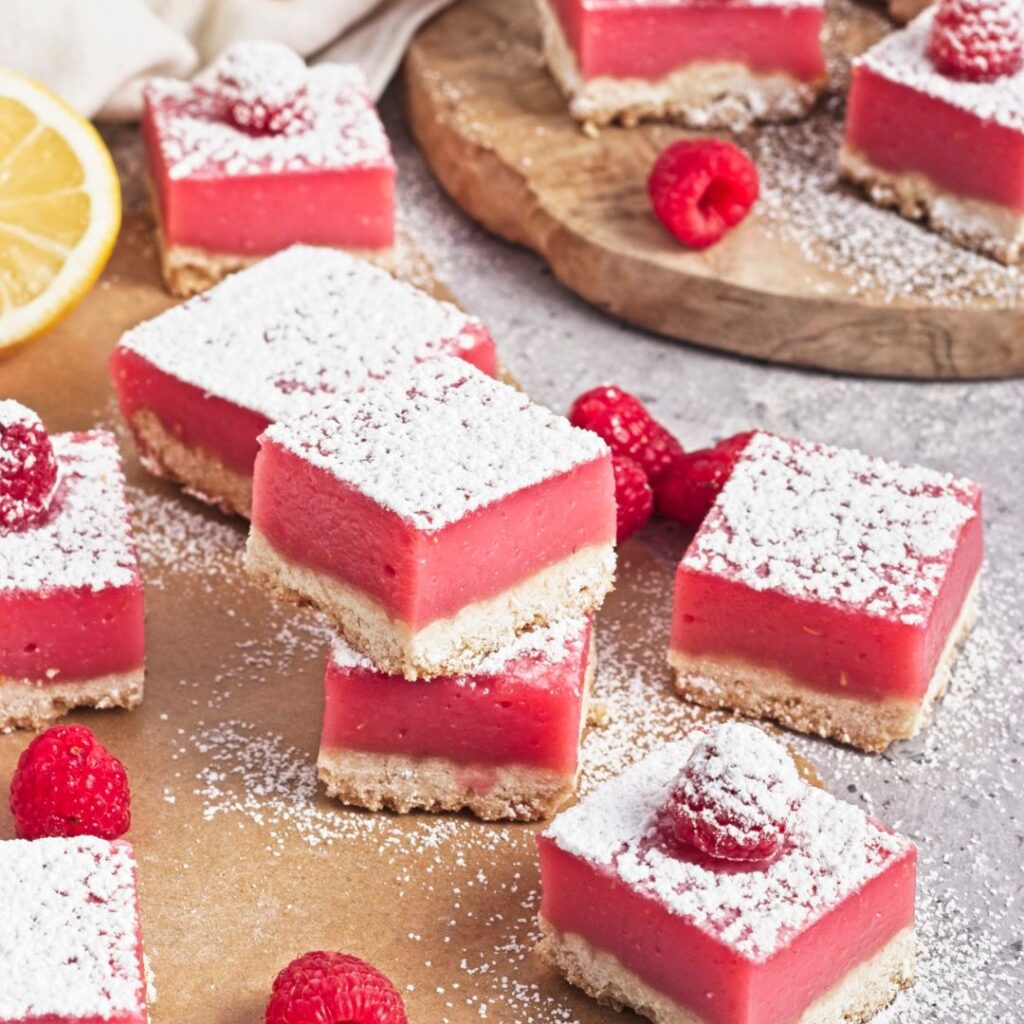
I’ve always had a soft spot for lemon bars, but sometimes I want a dessert that’s a little brighter and more fun.
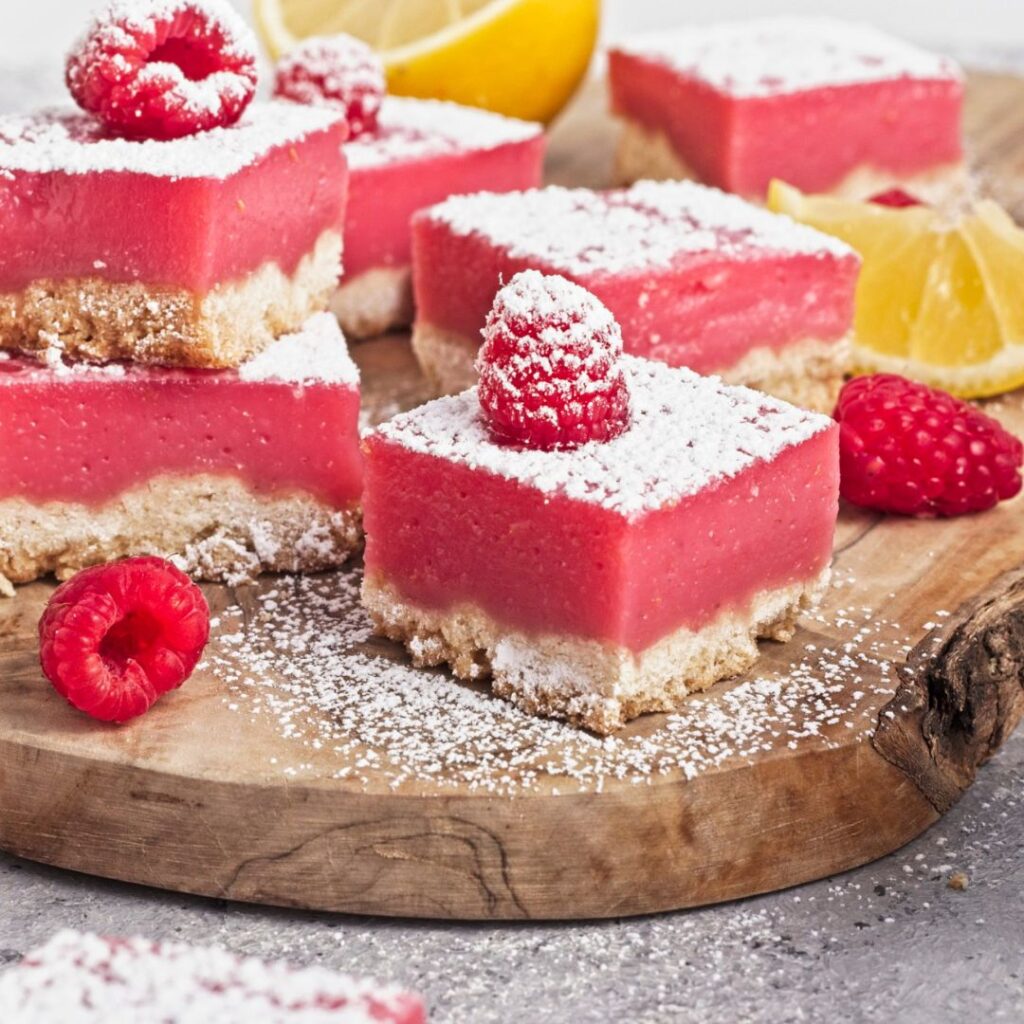
The first time I made these vegan raspberry lemon curd bars, it was honestly just because I had raspberries that needed to be used. I wasn’t expecting much. But once I saw that deep pink layer set over the shortbread base, I knew this one was special.
They’re sweet, tart, and bold in the best way. The raspberry gives the lemon curd a fresh twist, and the color alone makes it hard to resist.
I also love that they’re completely dairy-free and egg-free, but you’d never guess it from the texture. The curd sets beautifully and stays smooth and rich, especially after a few hours in the fridge.
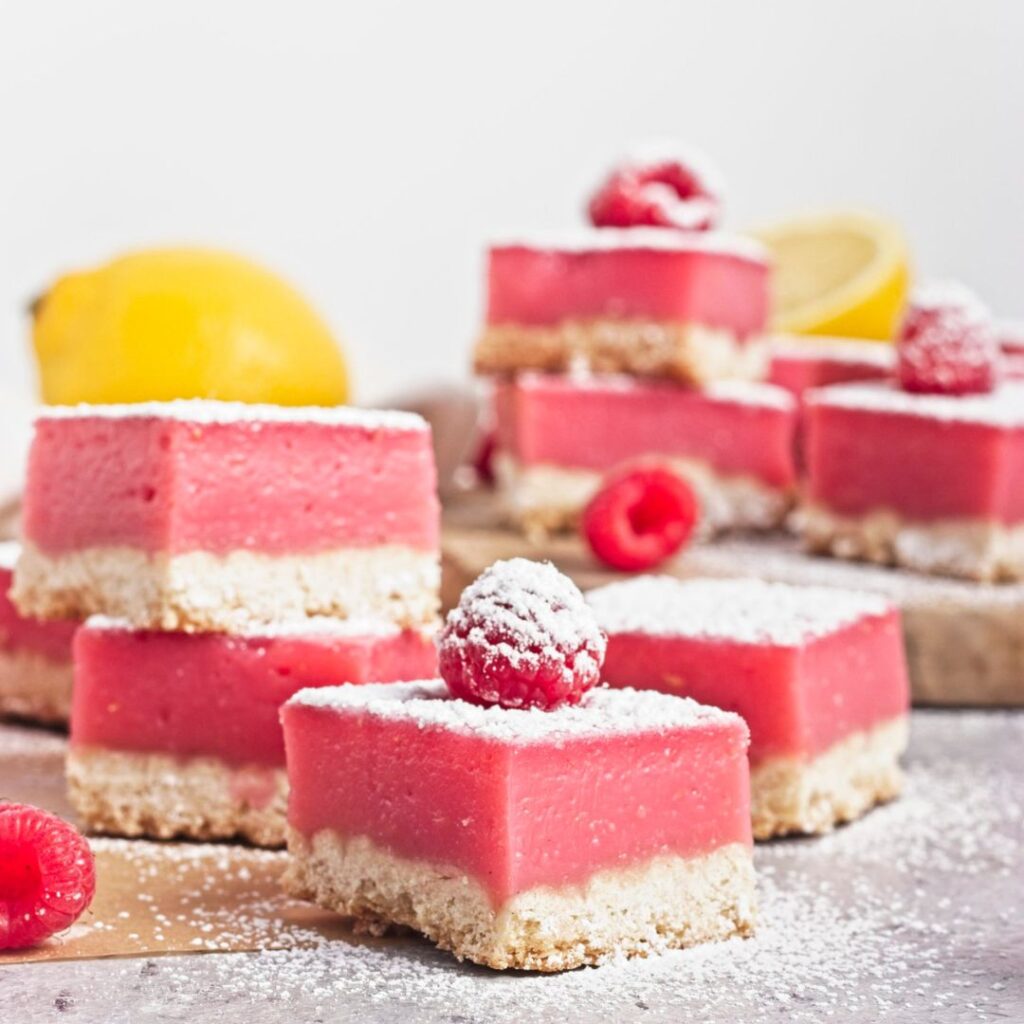
These are the kind of bars I make when I want a dessert that looks impressive. Slice them into squares, dust with powdered sugar, and suddenly you have a dessert that feels bakery-worthy right from your own kitchen.
Ingredients You’ll Need
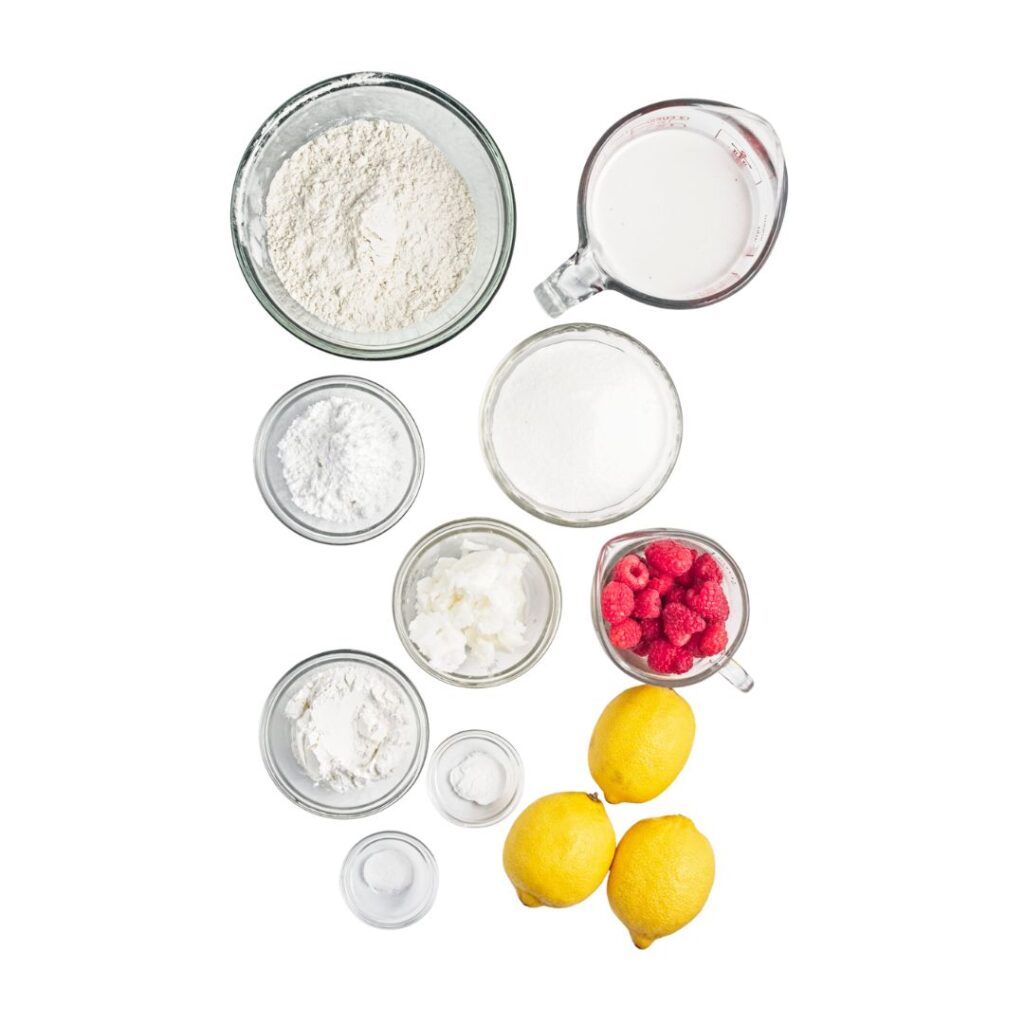
All-purpose flour (1 1/4 cups / 150 g): Forms the base of the shortbread crust and gives it structure.
Powdered sugar (6 tbsp / 45 g): Sweetens the crust gently without making it heavy.
Coconut oil, melted (5 tbsp / 75 ml): Helps bind the crust and gives it that tender, slightly crisp texture. Coconut oil works best here.
Baking powder (1/2 tsp / 2 g): Keeps the crust from feeling too dense.
Salt (1/4 tsp / 2 g): Balances the sweetness.
Water (1–2 tbsp / 15–30 ml): Just enough to help the crust hold together.
Lemon juice (1/2 cup / 120 ml): Brings the bright, tangy flavor to the curd layer. Fresh lemon juice makes a big difference.
Full-fat coconut milk (1 1/3 cups / 315 ml): Essential for a smooth, creamy curd. Don’t swap for low-fat.
Granulated sugar (1 1/4 cups / 250 g): Sweetens the curd and balances the lemon and raspberry.
Cornstarch (6 tbsp / 48 g): Thickens the curd and helps it set properly.
Raspberries (1 cup / 125 g): Fresh or frozen (thawed) both work. They give the bars their natural pink color and fruity flavor.
Powdered sugar, for topping: A light dusting before serving makes them look finished and bakery-style.
How to Make Vegan Raspberry Lemon Curd Bars
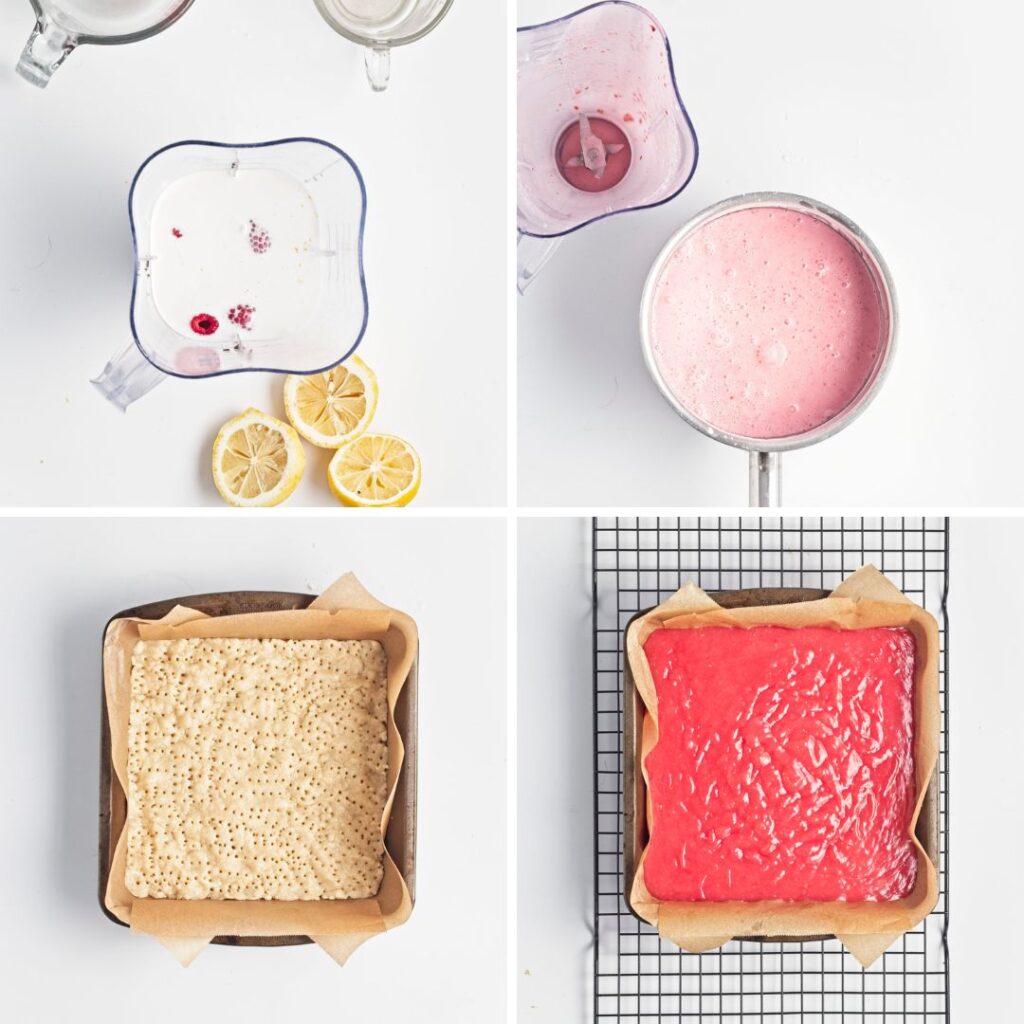
- Preheat your oven to 350°F (175°C) and line an 8×8-inch (20×20 cm) pan with parchment paper, leaving some overhang for easy removal later.
- In a large bowl, mix the flour, powdered sugar, baking powder, and salt. Stir in the melted coconut oil and 1 tablespoon of water. Add a little more water if needed, just until the dough holds together but is still slightly crumbly.
- Press the dough evenly into the prepared pan. Prick it with a fork, then bake for 18–20 minutes until lightly golden around the edges.
- While the crust bakes, blend the raspberries, lemon juice, and coconut milk until smooth.
- In a saucepan, whisk together the granulated sugar and cornstarch. Add a small amount of the raspberry mixture to form a smooth paste, then slowly whisk in the rest. Cook over medium heat, stirring constantly, until thick and glossy, about 7 minutes.
- Pour the thickened curd through a fine mesh sieve over the baked crust to remove seeds. Return the pan to the oven and bake for another 15 minutes, until slightly darker at the edges.
- Let the bars cool at room temperature for about 30 minutes, then refrigerate for at least 2 hours (overnight is even better).
- Once fully chilled, lift them out using the parchment paper. Dust with powdered sugar, slice into squares, and serve.
Recipe Notes
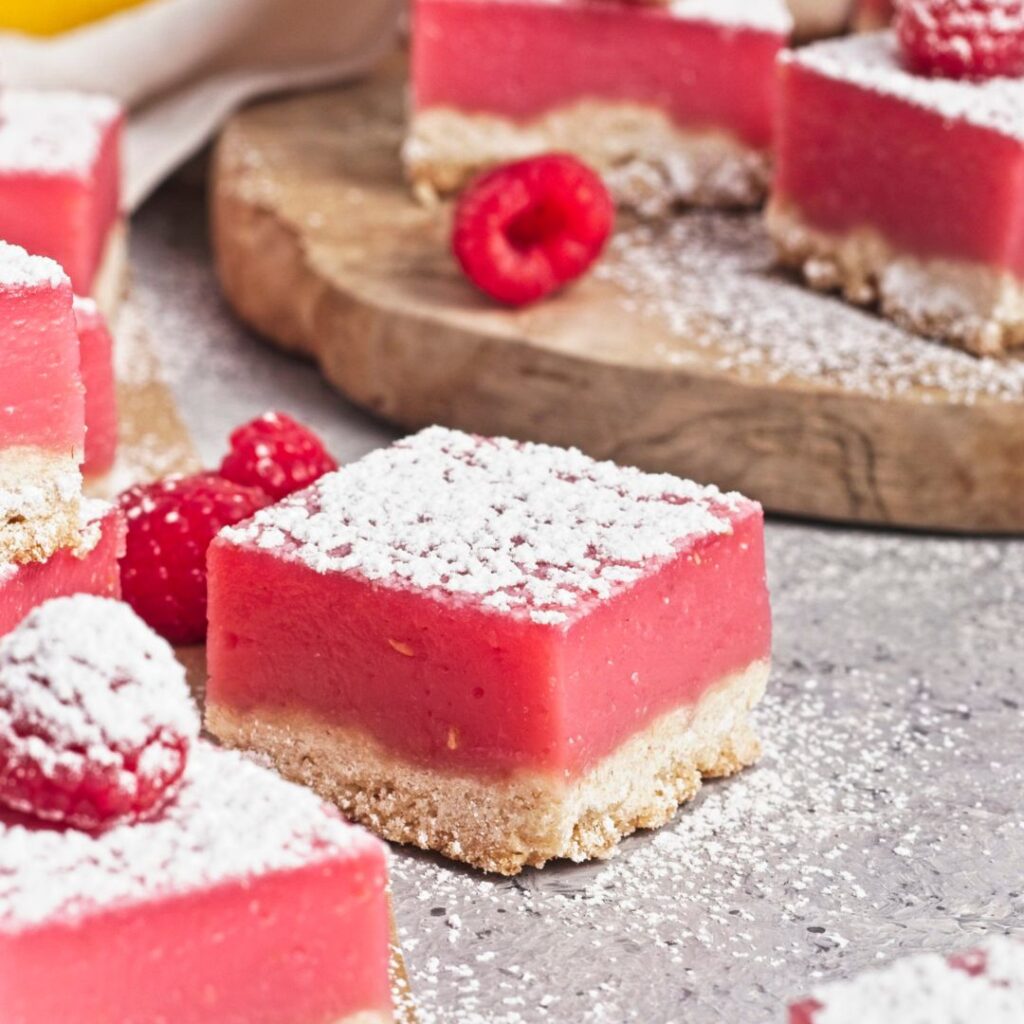
Full-fat coconut milk really matters here. The fat helps the curd turn smooth and rich instead of thin. Lighter versions won’t set the same way.
If you want clean slices, chill the bars completely before cutting. I like to run a large knife under hot water, dry it, and wipe it between cuts. It makes a big difference.
You can use fresh or frozen raspberries. If using frozen, just let them thaw first so they blend smoothly.
These bars are best the same day or the next. After a couple of days in the fridge, the crust can soften a bit and the curd won’t be quite as silky.
Any neutral oil can work in the crust, but coconut oil gives the best texture and blends nicely with the coconut in the filling.