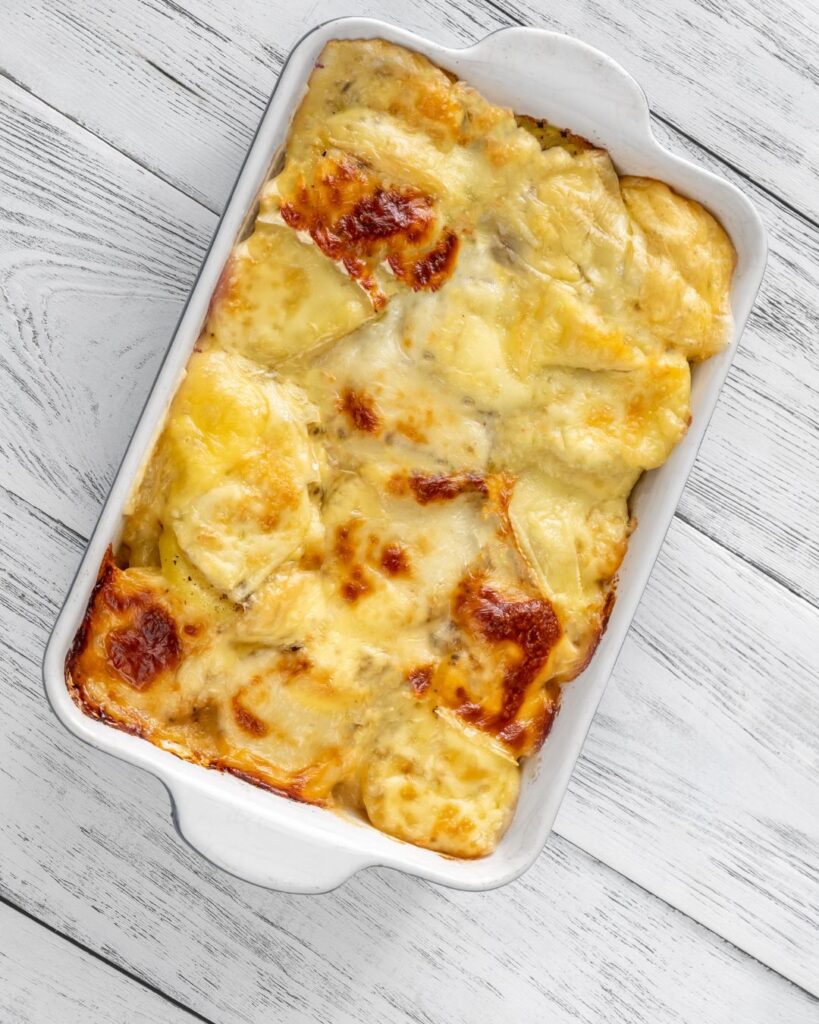
Potatoes, bacon, cream, and melted cheese are hard to get wrong, which probably explains why tartiflette is so popular in the French Alps. It was originally created to promote Reblochon cheese, but it now feels like the sort of traditional mountain dish that has been around forever.

This is not a light dinner, but it is exactly what I like to serve on a cold Sunday when everyone is hungry. The potatoes are layered with bacon and onions, covered with cream and cheese, then baked until bubbling and golden. I usually serve it with a simple green salad or pickled vegetables to balance all that richness.
Ingredients
Potatoes: Use waxy potatoes such as Yukon Gold. They hold their shape better than floury potatoes after boiling and baking.
Reblochon cheese: This soft French cheese gives tartiflette its traditional creamy texture and strong flavor. Keep the rind on, as it melts and browns in the oven.
Bacon or lardons: Thick-cut bacon works well if French lardons are unavailable. Cut it into small pieces before cooking.
Onion: A yellow onion adds sweetness and balances the salty bacon and cheese.
Garlic: Rub a cut garlic clove around the baking dish and add a little to the onion mixture.
Dry white wine: Use a wine that you would drink. It helps loosen the browned pieces from the pan and adds acidity.
Heavy cream: A small amount keeps the potato layers creamy without making the casserole too wet.
Butter: Use it to grease the baking dish and prevent the potatoes from sticking.
Salt and black pepper: Season carefully because the bacon and Reblochon are already salty.
Fresh rosemary: This is optional, but a small amount works well with the potatoes and cheese.
Directions
Prepare the potatoes. Place the whole, unpeeled potatoes in a large pot of salted water. Bring to a boil and cook until just tender when pierced with a knife, about 15 to 20 minutes. Drain, let them cool slightly, then peel and cut into thick slices.
Cook the bacon and onion. Add the bacon or lardons to a large skillet and cook over medium heat until lightly browned. Add the sliced onion and cook until soft. Stir in the minced garlic and cook for another minute.
Add the wine. Pour the white wine into the skillet and scrape up any browned pieces from the bottom. Simmer for a few minutes until most of the liquid has reduced.
Prepare the baking dish. Heat the oven to 375°F (190°C). Rub the inside of a baking dish with a cut garlic clove, then grease it lightly with butter.
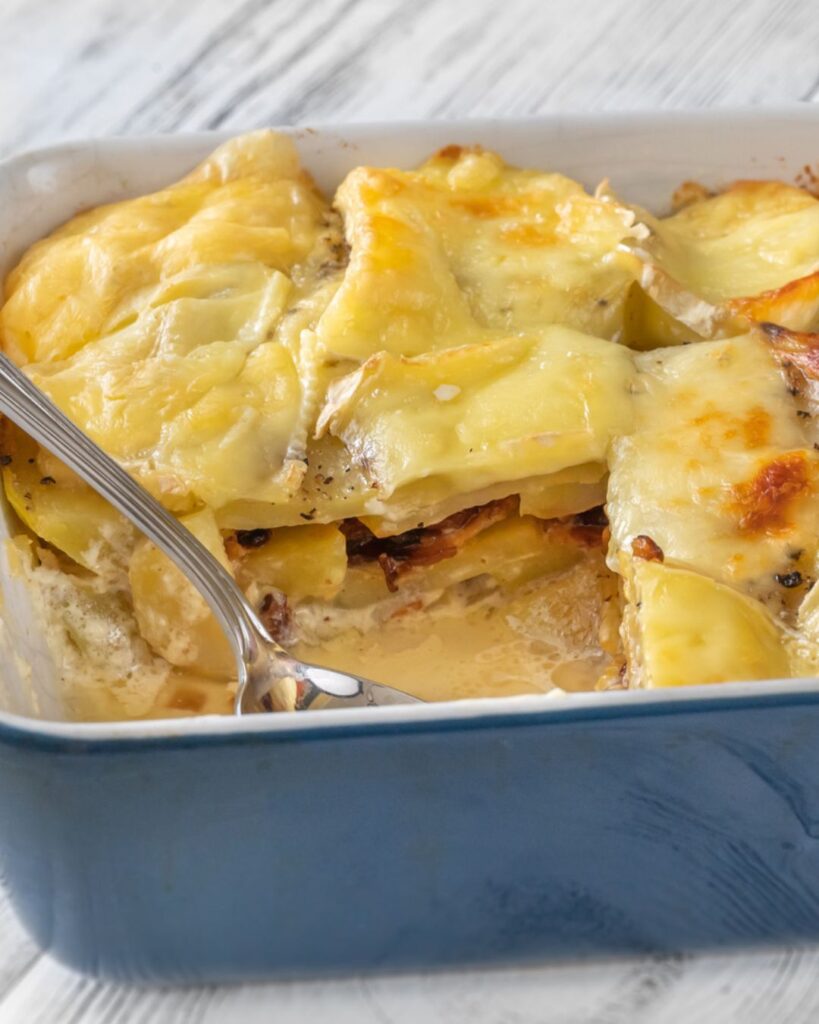
Layer the tartiflette. Arrange half of the sliced potatoes in the dish and season lightly with black pepper. Spoon over half of the bacon and onion mixture. Repeat with the remaining potatoes and bacon mixture, then pour the cream evenly over the top.
Add the cheese. Cut the Reblochon in half horizontally, then cut each half into large pieces. Place them rind-side up over the potatoes.
Bake. Bake for 25 to 30 minutes, until the cheese has melted and the top is bubbling and golden brown.
Rest and serve. Let the tartiflette rest for about 10 minutes before serving. Add a little fresh rosemary if desired and serve with a green salad or pickled vegetables.
Recipe Notes
Do not overcook the potatoes. Boil them only until just tender. They will continue cooking in the oven and can fall apart if they are too soft.
Keep the cheese rind on. The Reblochon rind is edible and helps create the golden top traditionally associated with tartiflette.
Use a suitable cheese substitute. If Reblochon is unavailable, try Taleggio, Fontina, Brie, or Camembert. The flavor will be different, but the casserole will still be creamy.
Be careful with the salt. Bacon and cheese both contain plenty of salt, so taste the bacon and onion mixture before adding more.
Skip the wine if needed. Replace it with chicken stock and a small splash of lemon juice for acidity.
Prepare it in advance. Assemble the tartiflette, cover it, and refrigerate it for up to one day. Let it sit at room temperature while the oven heats, then bake as directed. It may need a few extra minutes.
Store leftovers properly. Keep leftovers covered in the refrigerator for up to three days. Reheat them in the oven until hot throughout.
Avoid freezing. Cooked potatoes and cream can become grainy after freezing, so tartiflette is best eaten fresh or refrigerated.