I don’t know what it is about butternut squash, but every fall I buy at least one with big plans and then let it sit on the counter for a few days.

This risotto is usually what saves it. It feels a little fancy, but it’s really just rice, broth, squash, and a bit of patience.
As it cooks, the kitchen smells like sage and garlic, and the squash melts right into the creamy rice. It’s one of those meals that looks impressive enough for guests but is simple enough for a regular weeknight.
I love topping it with a few crispy sage leaves and pine nuts to make it feel special, even if we’re just eating it in our everyday bowls.
Why You Will Love This Recipe

It’s creamy and cozy without using any dairy, so it works for just about everyone at the table. The butternut squash adds a gentle sweetness that makes the risotto taste rich and comforting.
It feels like something you would order at a restaurant, yet it comes together at home in a little over half an hour.
You can keep it simple for a regular weeknight or add the fried sage and pine nuts to make it feel extra special.
You Will Need

- 1 lb (450 g) butternut squash, peeled and diced (about 3 cups)
- 4 tbsp (60 ml) olive oil, divided
- 2 tbsp (6 g) fresh sage, chopped
- 1/2 medium (115 g) yellow onion, minced
- 2 cloves (10 g) garlic, minced
- 1 cup (200 g) arborio rice
- 2 1/2 cups (590 ml) vegetable broth, divided
- 3/4 cup (175 ml) dry white wine
- 1/2 tsp (3 g) salt
- 1/2 tsp (1 g) ground black pepper
- 1/2 tsp (1 g) ground nutmeg
- Fresh sage leaves, for frying
- Pine nuts, for toasting
How to Make Butternut Risotto
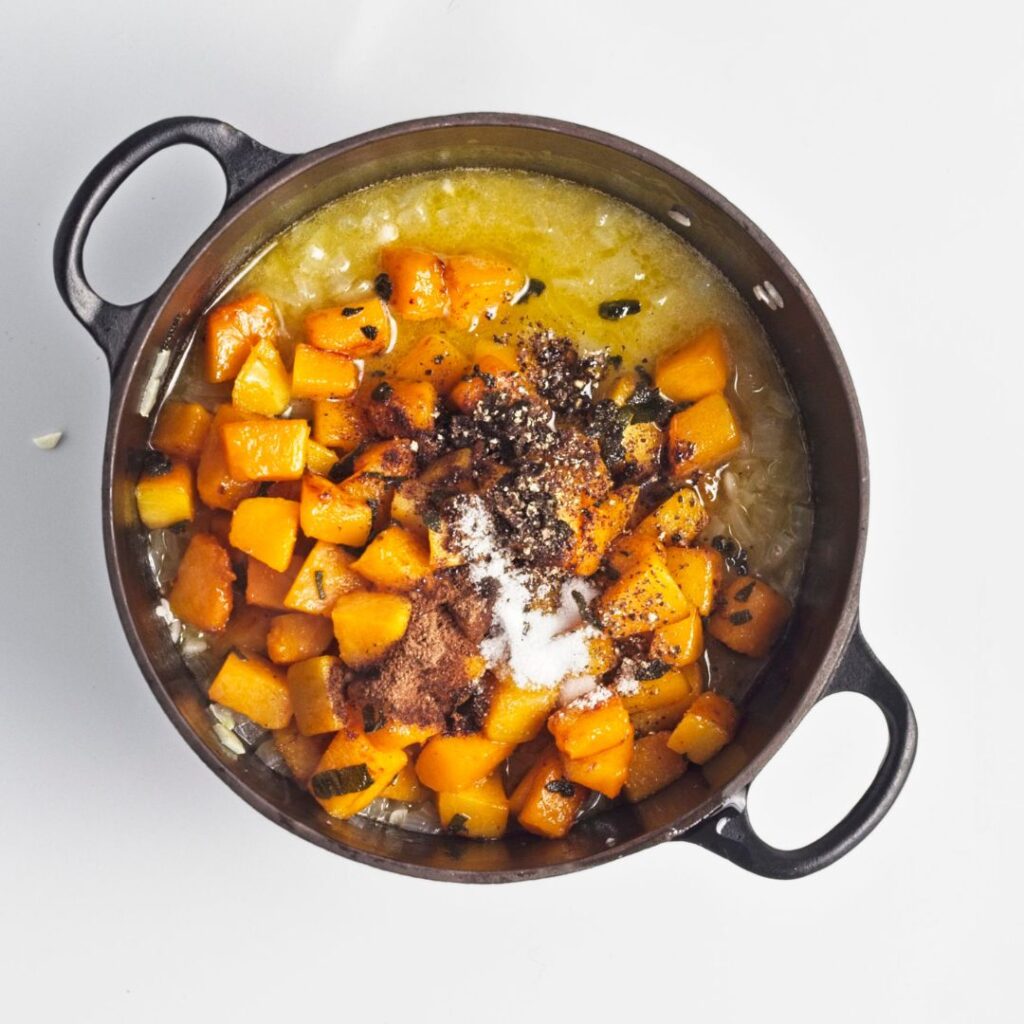
- Peel and dice the butternut squash into small 1/2-inch cubes. Mince the onion and garlic, and chop the sage.
- Heat 1 tablespoon olive oil in a large pan over medium heat. Add the chopped sage and cook for about 1 minute until fragrant. Add the squash cubes and cook for 6 to 8 minutes, stirring occasionally, until they soften on the edges and lightly brown. Set aside.
- In a heavy-bottom pot, heat 2 tablespoons olive oil over medium heat. Add the onion and garlic and cook for 1 to 2 minutes until softened.
- Stir in the arborio rice and cook for about 1 minute, stirring often, until the edges of the rice turn slightly translucent.
- Pour in the white wine and stir, scraping up anything stuck to the bottom. Let it simmer for 1 to 2 minutes until most of the liquid cooks off.
- Add 2 cups of vegetable broth, the cooked squash and sage, salt, and pepper. Reduce heat to medium-low and cook for 12 to 14 minutes, stirring regularly, until the liquid is absorbed and the rice becomes creamy.
- Stir in the remaining 1/2 cup broth and cook for another 2 to 3 minutes, stirring, until the rice is tender and plump. Add nutmeg and adjust salt if needed.
- For the topping, heat 1 tablespoon olive oil in a pan. Fry whole sage leaves for 15 to 30 seconds per side until crisp, then remove to paper towels. Toast pine nuts in the same pan for 30 to 60 seconds until golden.
- Serve the risotto warm, topped with fried sage leaves and toasted pine nuts.
Recipe Notes

For the creamiest texture, keep the heat gentle and stir regularly. Risotto isn’t hard, but it does like a little attention. Slow cooking helps the rice release its starch and turn smooth and rich.
If you prefer not to use wine, simply replace it with more vegetable broth. To keep the flavor balanced, add a small splash of white wine vinegar or white balsamic at the end to brighten it up.
You can swap butternut squash for other firm winter squash like kabocha or red kuri. Just keep the cubes small so they cook evenly.
This risotto is best served right away while it’s warm and creamy. If it thickens as it sits, stir in a splash of warm broth to loosen it before serving.