I’ll be honest, I never really cared about regrowing food scraps until I had kids.
Before that, if vegetables went bad in the fridge or herbs dried out after a few days, I just tossed them without thinking much about it.
But once you start feeding a family, especially growing kids, you begin paying a lot more attention to both your grocery budget and the quality of the food you bring into the house.
And since I’ve always been a pretty frugal woman, the idea of throwing away perfectly good food started to bother me more and more.
That’s when I discovered that many foods can actually regrow using nothing more than a little water, sunlight, and patience. Things like green onions, lettuce, celery, and herbs can keep growing right in your kitchen instead of going straight into the trash.
My kids also love watching the process happen. There’s something fun about seeing roots appear in a glass of water after just a few days, and it’s honestly a great way to get children more interested in healthy foods and where they come from.
These foods are easy to regrow, beginner-friendly, and perfect if you want to waste less food, save a little money, and keep fresh ingredients around the kitchen without much effort.
Why Should You Regrow Food?
It saves money…not a lot but it saves!
As a frugal woman and a mom, I also like that it teaches kids not to waste food. Instead of throwing away scraps like green onion roots or celery bottoms, you can give them a second life and turn it into a fun little project the whole family can watch grow together.
Another reason I love regrowing food is convenience. There’s nothing worse than starting dinner and realizing you’re out of fresh herbs or green onions. When you regrow them at home, you often have something fresh ready to snip whenever you need it.
It’s also beginner-friendly. You don’t need a big garden, expensive tools, or special skills. Many foods will regrow with just a jar of water and a sunny windowsill.
And honestly, watching food grow from scraps you would normally throw away is so satisfying.
10 Foods to Regrow In Water
Green Onions (Scallions)
Probably the easiest one.
- Leave about 1–2 inches of the white root end
- Put roots in a small glass with water
- Keep near sunlight
- New shoots usually appear in 2–5 days
You can snip what you need and let them keep growing.
Romaine Lettuce
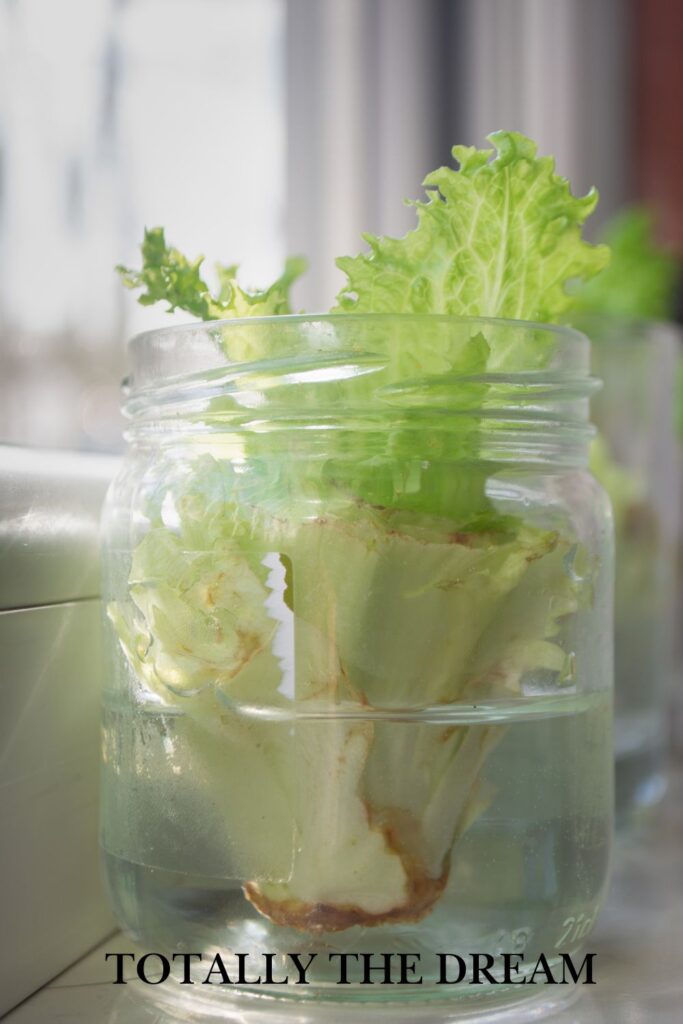
The base can regrow small new leaves.
- Save the bottom 2 inches
- Place in shallow water
- Change water every couple of days
It won’t grow a full grocery-store head again, but you’ll get fresh leafy growth.
Celery
One of the most satisfying to watch.
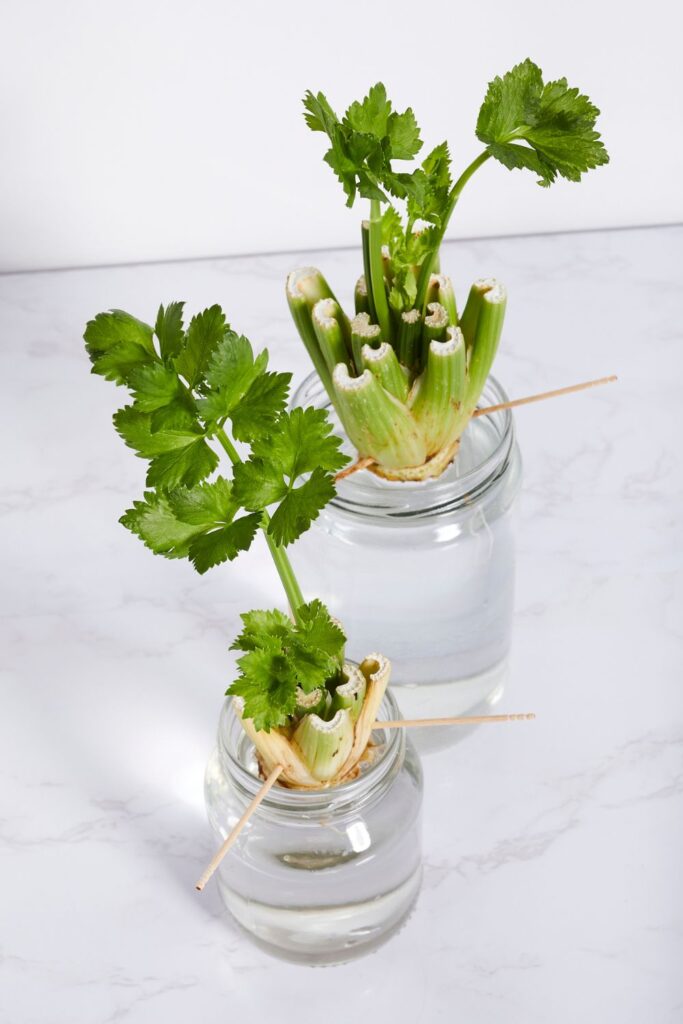
- Cut off the base
- Put it in a shallow bowl with water
- New leaves appear from the center
After a week or two, many people transfer it to soil.
Bok Choy
Regrows very quickly.
- Works similarly to lettuce and celery
- Loves bright indirect sunlight
- Often regrows faster than lettuce
Herbs (Mint, Basil, Rosemary)
Great if you cook often.
- Put cut stems in water
- Remove leaves below the water line
- Roots form after 1–3 weeks
Mint is especially hard to kill.
Garlic Greens
Even one clove can produce edible shoots.
- Put a garlic clove root-side down in shallow water
- Green shoots grow from the top
- The greens taste like mild garlic/chives
Sweet Potato
More of a fun project, but it works well.
- Suspend half the potato in water with toothpicks
- It grows roots and vines
- You can later plant the slips in soil
Leeks
Very easy to regrow and great for soups or stir fries.
• Place the root end in a shallow glass of water
• New green shoots appear within days
• Trim what you need and let it keep growing
Fennel
A fun one if you love fresh herbs and salads.
• Place the white bulb base in shallow water
• Green fronds start growing from the center
• Move it to soil later for bigger growth
Lemongrass
Perfect if you cook Asian dishes often.
• Put the stalk base in a jar with water
• Roots and fresh shoots grow after about a week
• Transfer to soil once the roots get stronger
Tips and Tricks
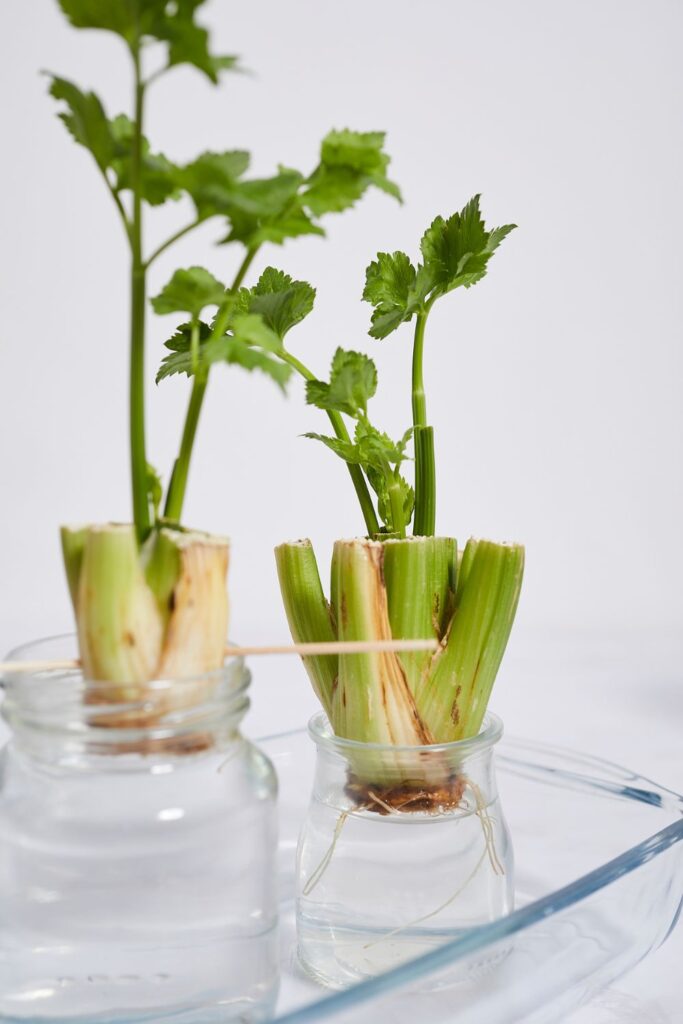
Change the water every couple of days to keep it fresh and prevent bad smells or bacteria from building up. Clean water helps the roots stay healthy and grow faster.
Place your jars near a sunny window where the plants can get several hours of natural light each day. Most kitchen scraps grow much better with warmth and sunlight.
Try using clear containers if you want to watch the roots develop. It also makes it easier to see when the water needs changing.
Avoid fully submerging the scraps unless the plant specifically needs it. Too much water can cause certain vegetables to become soft or rot.
Trim leaves and greens regularly once they start growing. Harvesting often encourages fresh new growth.
Some plants can stay in water for quite a while, but many will grow better if you transfer them to soil after strong roots develop.
Start with fresh, healthy scraps whenever possible. Older or dried-out vegetables usually regrow much more slowly.
Be patient with slower-growing plants like pineapple, avocado, ginger, or turmeric. Some foods regrow within days, while others may take several weeks before showing visible growth.
Other foods that will regrow using just a small scrap
Other foods that will regrow using just a small scrap include carrot tops, beet greens, pineapple, ginger, turmeric, mushrooms, and avocado pits.
Carrot tops and beet greens can grow fresh leafy greens when placed in shallow water, while ginger and turmeric slowly sprout new shoots that can later be planted in soil.
Pineapple tops can eventually grow into an entirely new plant, although they take patience.
Mushroom stems sometimes regrow in moist conditions, and avocado pits can sprout roots and turn into beautiful indoor plants with enough sunlight and time.