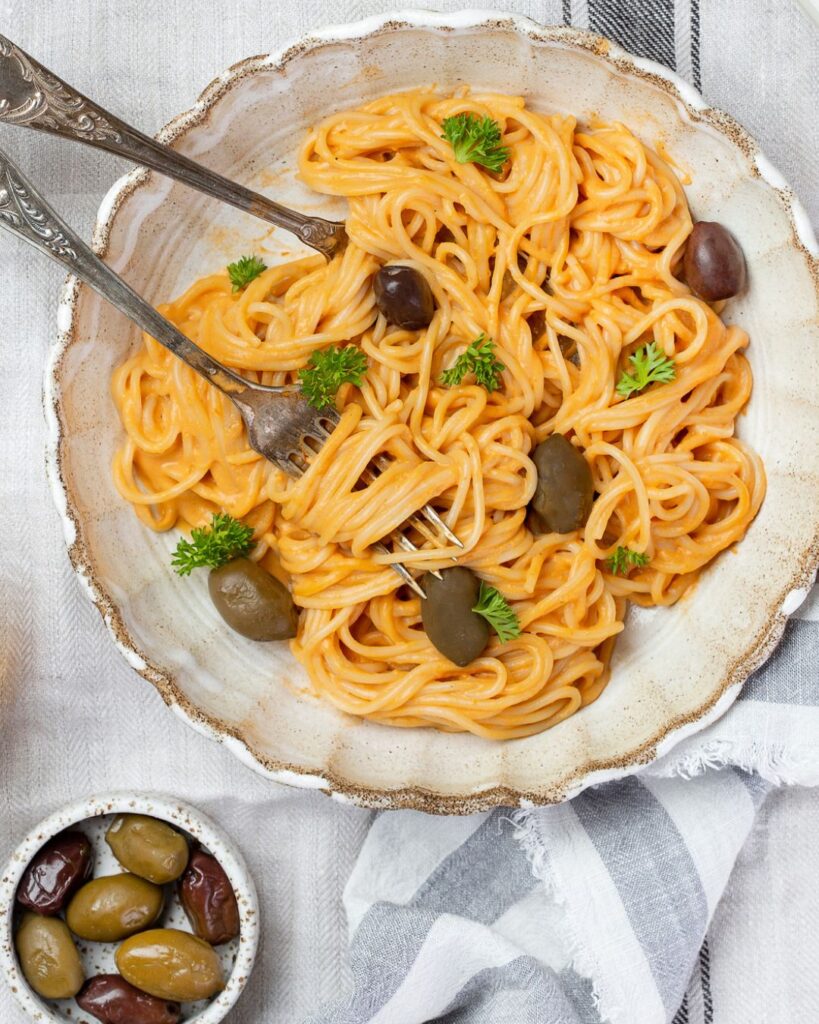
Pasta is usually my answer when I need to make dinner quickly and do not want to hear complaints from anyone at the table. A basic tomato sauce works, but adding a little cream makes it smoother, milder, and much more popular with my kids.
This creamy tomato pasta takes about 30 minutes and uses ingredients I normally already have in the kitchen. I added green and black olives for a salty Mediterranean touch, but you can leave them out if your family is not a fan.
Serve it as a meatless dinner or add chicken, shrimp, or Italian sausage for a more substantial meal.
You’ll Need
Spaghetti: I used spaghetti, but penne, rigatoni, fusilli, or any pasta you already have will work.
Olive oil: For cooking the onion and garlic and starting the sauce.
Onion: Finely chop a small yellow onion so it softens quickly and blends into the sauce.
Garlic: Fresh garlic gives the creamy sauce much more flavor.
Tomato sauce: Use plain tomato sauce or passata rather than a heavily seasoned pasta sauce.
Heavy cream: This softens the acidity of the tomatoes and gives the sauce its smooth texture and light orange color.
Parmesan: Freshly grated Parmesan melts more easily and helps thicken the sauce.
Olives: Green, black, or a combination of both can be added. Keep them whole, slice them, or leave them out for anyone who does not like olives.
Seasonings: Salt, black pepper, and a small amount of red pepper flakes are enough. Add dried oregano or Italian seasoning if you prefer a stronger herb flavor.
Fresh herbs: Finish the pasta with parsley or basil for a little freshness and color.
Pasta water: Save some before draining the spaghetti. It helps loosen the sauce without making it watery.
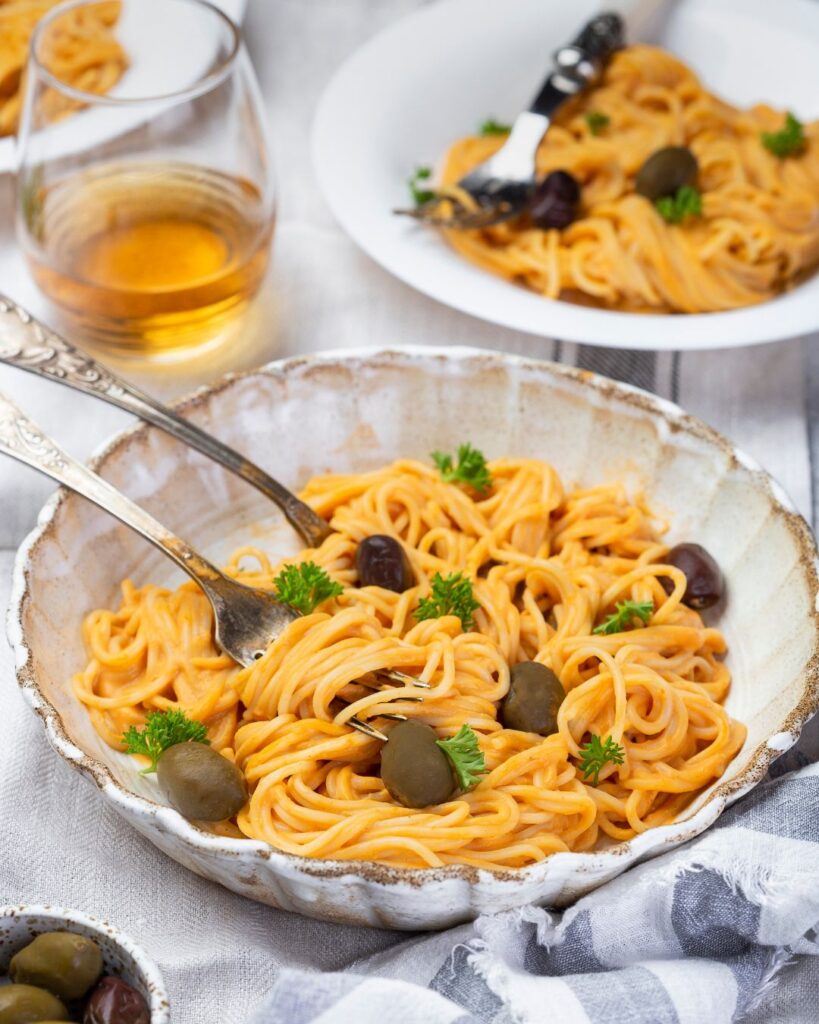
How to Make Creamy Tomato Pasta
Cook the pasta: Bring a large pot of salted water to a boil and cook the spaghetti until al dente. Before draining it, reserve about one cup of the pasta water.
Cook the onion: While the pasta cooks, heat the olive oil in a large skillet over medium heat. Add the finely chopped onion and cook for 4 to 5 minutes, until soft.
Add the garlic: Stir in the minced garlic and red pepper flakes. Cook for about 30 seconds, just until the garlic becomes fragrant.
Make the tomato sauce: Pour in the tomato sauce and add the oregano, salt, and black pepper. Reduce the heat and let it simmer for 5 to 8 minutes.
Add the cream: Lower the heat and slowly stir in the heavy cream. Keep stirring until the sauce is evenly mixed and has a smooth, light orange color.
Finish the sauce: Add the grated Parmesan and stir until it melts. If the sauce seems too thick, add a little reserved pasta water until it reaches the consistency you prefer.
Combine everything: Add the drained spaghetti and olives to the skillet. Toss gently until the pasta is completely coated, then cook for another minute so everything is heated through.
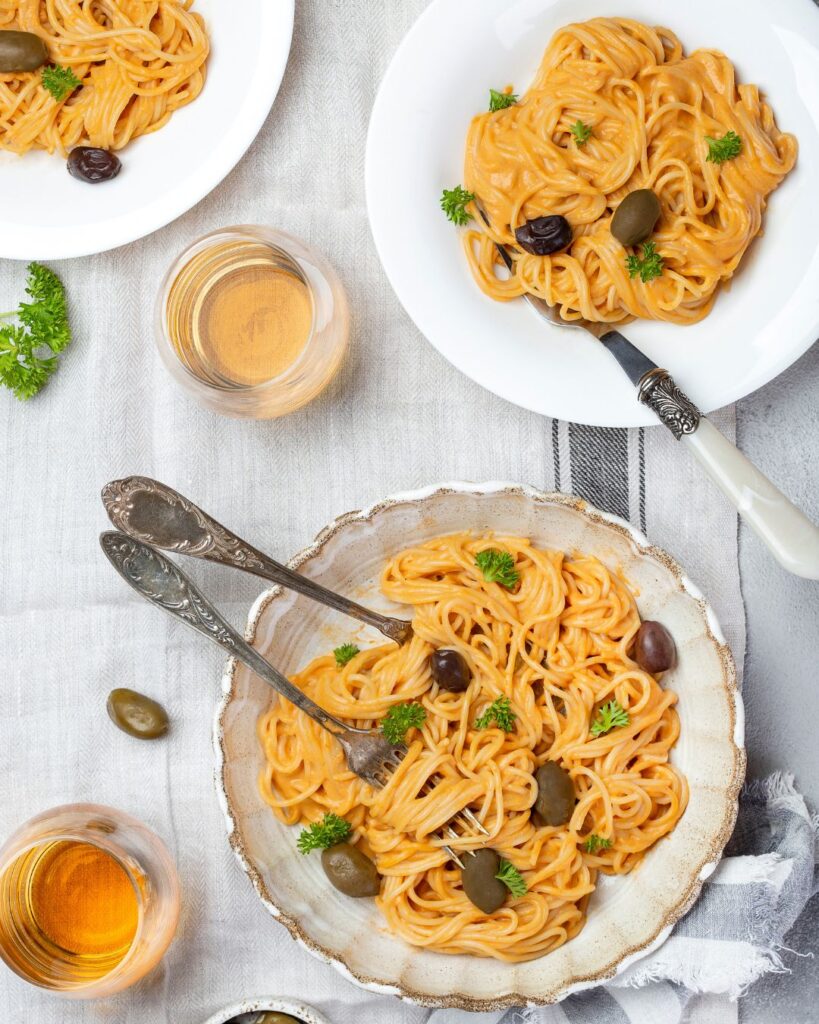
Serve: Divide the pasta between bowls and finish with fresh parsley or basil and extra Parmesan.
Recipe Notes
Keep the heat low after adding the cream: High heat can cause the sauce to separate. Let the tomato sauce finish simmering first, lower the heat, and then stir in the cream.
Use freshly grated Parmesan: Pre-shredded cheese often contains additives that prevent it from melting smoothly.
Save the pasta water: The sauce thickens as it sits. Add the reserved water a little at a time until it coats the spaghetti without becoming too thin.
Add the olives to taste: Whole olives look nice in the finished dish, but sliced olives spread their flavor more evenly. If they are very salty, rinse and drain them first.
Balance acidic tomatoes: If the sauce tastes too sharp, add a small pinch of sugar. Taste it again before adding more.
Make it lighter: Half-and-half can replace heavy cream, although the sauce will be thinner and should not be boiled.
Add protein: Cooked chicken, shrimp, Italian sausage, or canned tuna can be stirred into the sauce before adding the pasta.
Storing leftovers: Refrigerate the pasta in an airtight container for up to three days.
Reheating: Warm it slowly in a skillet with a splash of milk, cream, or water. Stir frequently until the sauce becomes smooth again.