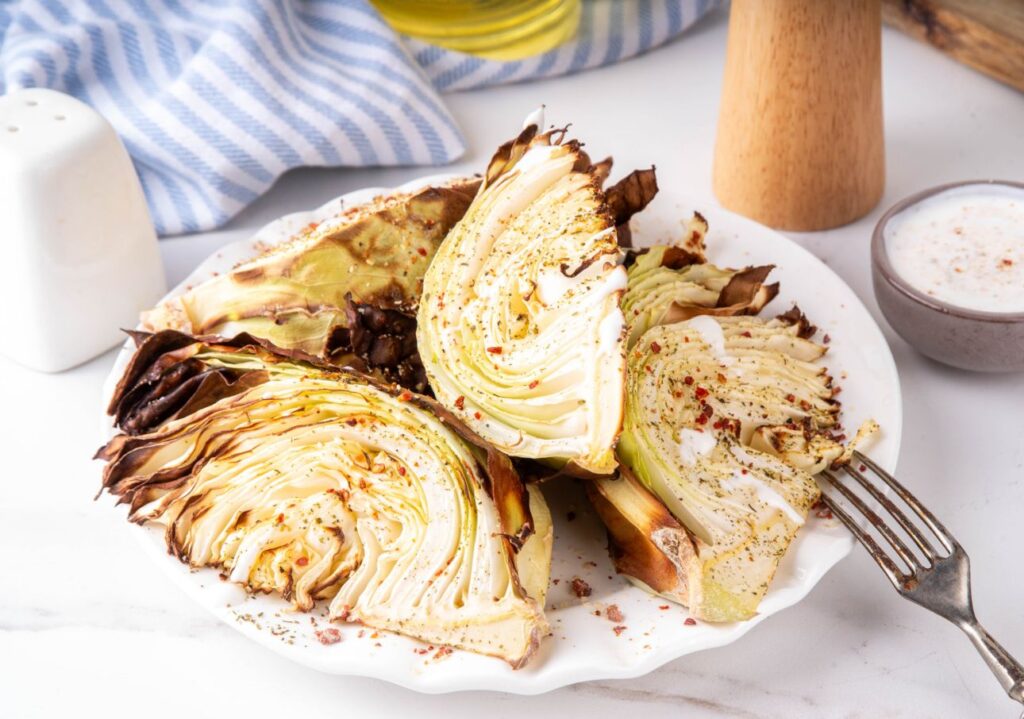
I usually buy cabbage for soup, salad, or a simple side dish, but roasting it may be my favorite way to prepare it.
The edges become dark and crisp while the thick center turns tender and slightly sweet. A creamy cheese sauce adds enough richness to make these roasted cabbage wedges feel like more than an inexpensive vegetable side.
Why This Roasted Cabbage Recipe Works
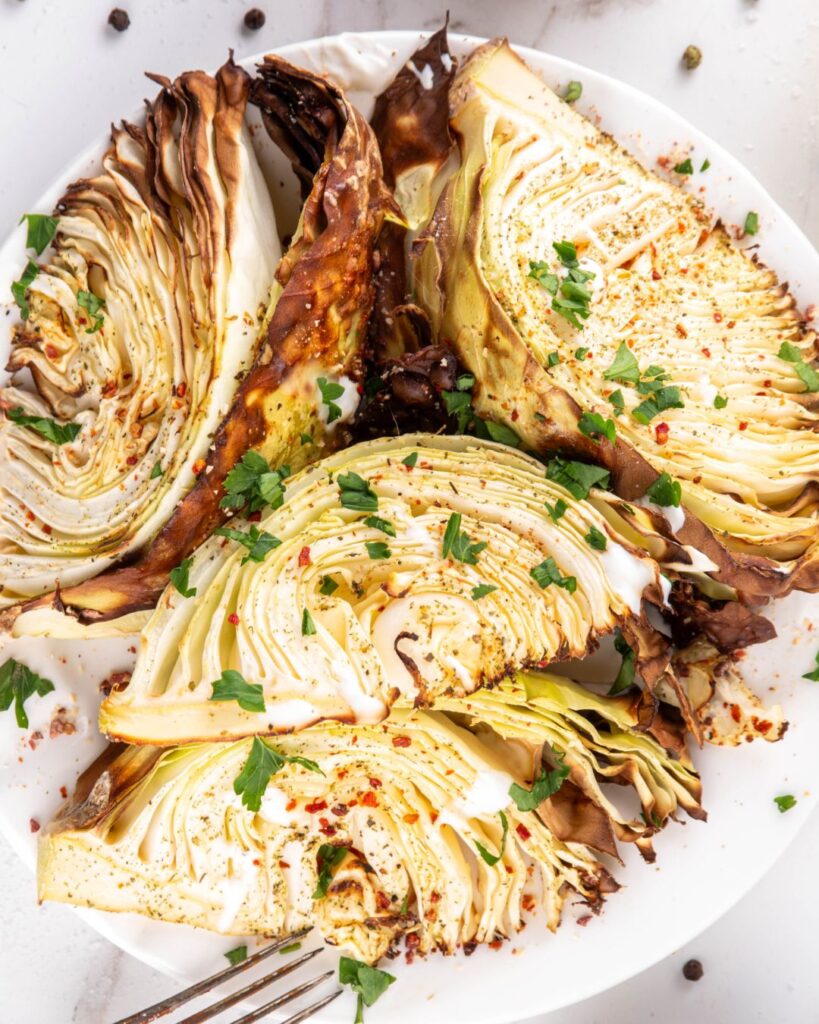
Cutting the cabbage into wedges keeps it intact. Leaving part of the core attached prevents the layers from separating while the cabbage roasts.
High heat creates crisp edges. A hot oven browns the thin outer leaves while cooking the thicker center until tender.
The seasoning stays simple. Olive oil, garlic, paprika, salt, and black pepper add flavor without covering the natural sweetness of the roasted cabbage.
The cheese sauce balances the cabbage. The smooth sauce adds a creamy contrast to the browned edges and works especially well with the slightly charred leaves.
Cabbage is inexpensive, lasts much longer in the refrigerator than many other vegetables, and one head makes enough for the whole family. I often buy it with one meal in mind and then use whatever remains in soup or coleslaw later in the week.
These wedges work well beside chicken, pork, or roast beef, but they can also be served as a light meal with bread and extra sauce. Just make sure everyone gets a few of those dark outer leaves because they have the most flavor.
Key Ingredients Needed
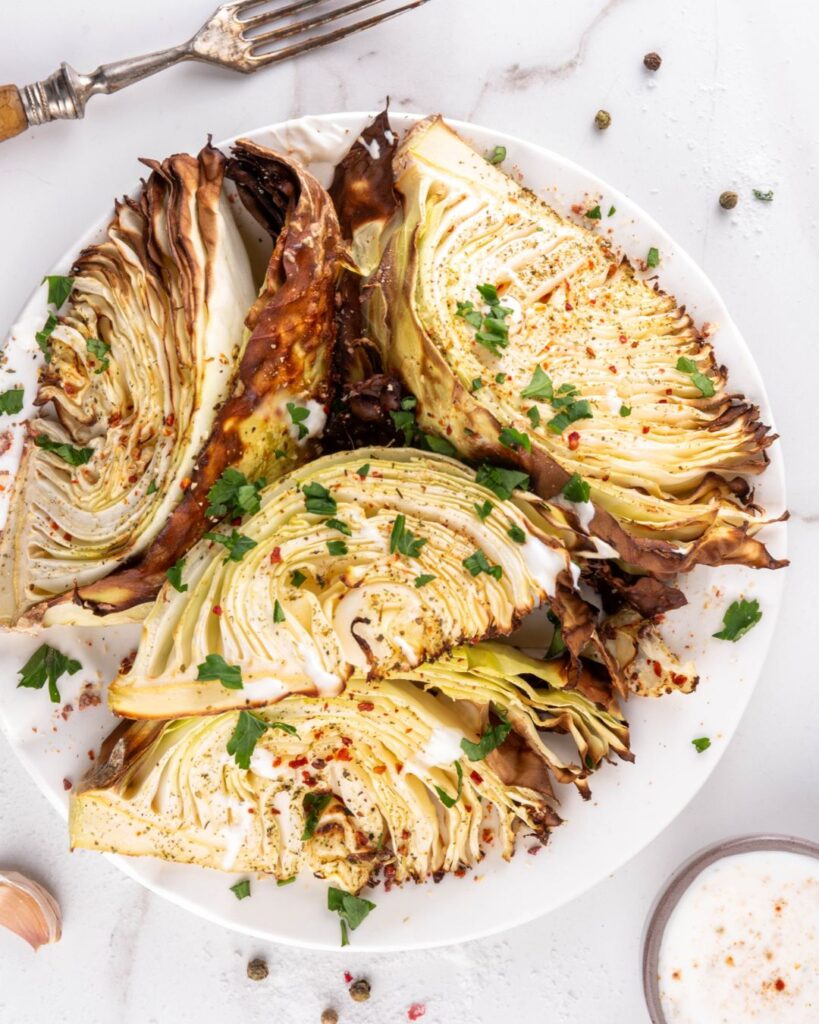
Green cabbage: Choose a firm, compact head without soft spots. A medium cabbage makes about six thick wedges, which is enough for four to six side servings.
Olive oil: Brushing the wedges generously with oil helps the outer leaves brown and prevents the cabbage from drying out in the oven.
Garlic powder: Garlic powder spreads more evenly than fresh garlic and will not burn while the cabbage roasts at high heat.
Smoked paprika: This adds a mild smoky flavor and gives the edges a little more color. Red pepper flakes can also be added for some heat.
Cream cheese: Softened cream cheese creates the base of the smooth sauce. Full-fat cream cheese gives it the creamiest texture.
Milk: A small amount thins the cream cheese into a sauce that can be drizzled over the roasted cabbage. Add it gradually until the sauce reaches the consistency you prefer.
Lemon juice: Lemon keeps the cheese sauce from tasting too heavy and works well with the sweetness of the roasted cabbage.
Salt and black pepper: Season both sides of each wedge before roasting, making sure some seasoning falls between the cabbage layers.
How to Make Crispy Roasted Cabbage Wedges
Cut the cabbage into wedges. Remove any damaged outer leaves, then cut the cabbage through the core into six thick wedges. Keep part of the core attached to each wedge so the layers remain together during roasting.
Season the cabbage. Arrange the wedges on a large lined baking sheet. Brush both sides generously with olive oil, then season with garlic powder, smoked paprika, salt, black pepper, and red pepper flakes if using.
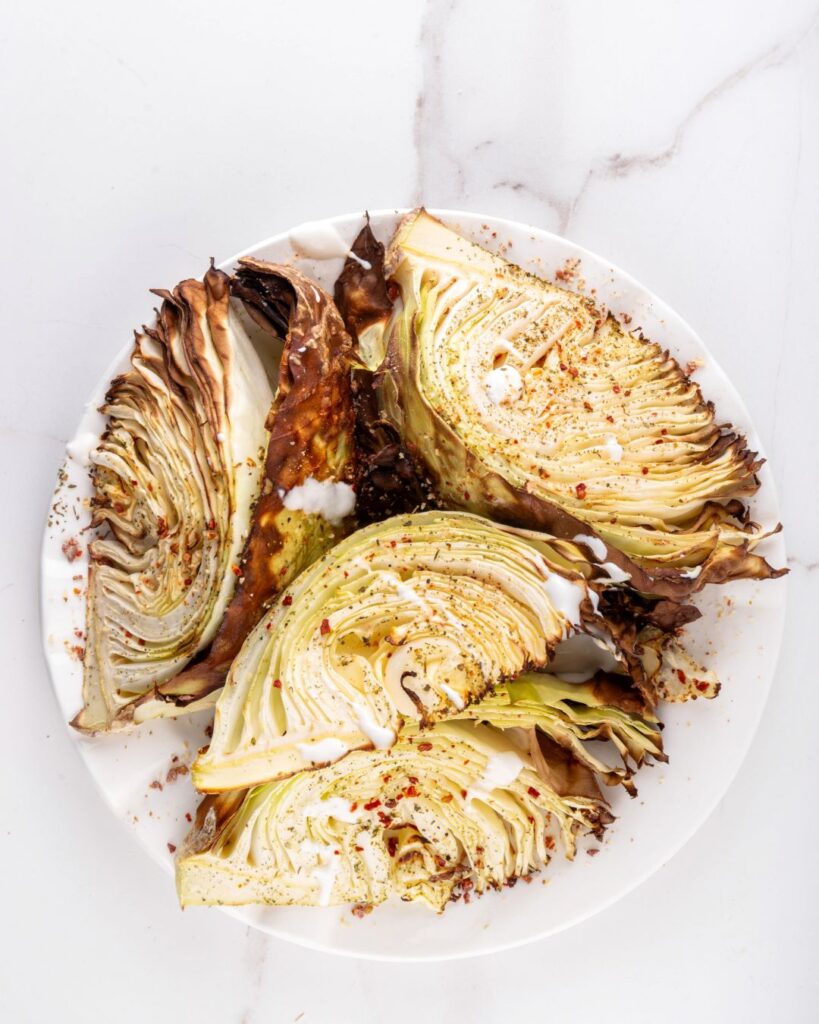
Roast the wedges. Roast at 425°F (220°C) for 20 minutes. Carefully turn each wedge and continue roasting for another 15 to 20 minutes. The cabbage should be tender in the center with dark, crisp edges.
Prepare the cheese sauce. Add the softened cream cheese, milk, lemon juice, garlic powder, and a pinch of salt to a small saucepan. Warm over low heat while whisking until smooth. Add another splash of milk if the sauce is too thick.
Finish and serve. Transfer the roasted cabbage to a serving plate and drizzle some of the warm cheese sauce over the wedges. Serve the remaining sauce on the side.
Recipe Notes
Keep the core attached. The core holds the cabbage layers together, making the wedges much easier to turn without falling apart.
Cut wedges of similar size. Uneven pieces will not cook at the same rate. Thin wedges may burn before thicker ones become tender.
Use enough olive oil. Cabbage needs a generous coating of oil to brown properly. Brush both cut sides and try to get a little oil between the outer layers.
Give the wedges enough room. Arrange them in a single layer without crowding the pan. If the wedges are too close together, they will steam instead of developing crisp edges.
Do not worry about the dark leaves. The deeply browned outer leaves have the most flavor. Remove only those that are completely burned.
Turn the wedges carefully. Use a wide spatula and support the top with a fork or tongs while flipping. This helps keep the layers intact.
Adjust the cheese sauce slowly. Add the milk a little at a time. It is easy to make the sauce thinner, but difficult to thicken it again without adding more cream cheese.
Serve the sauce warm. Cream cheese sauce thickens as it cools. Reheat it gently over low heat and whisk in a small splash of milk if needed.